The same GPU costs $1.25 or $4.29. What an H100 price actually means
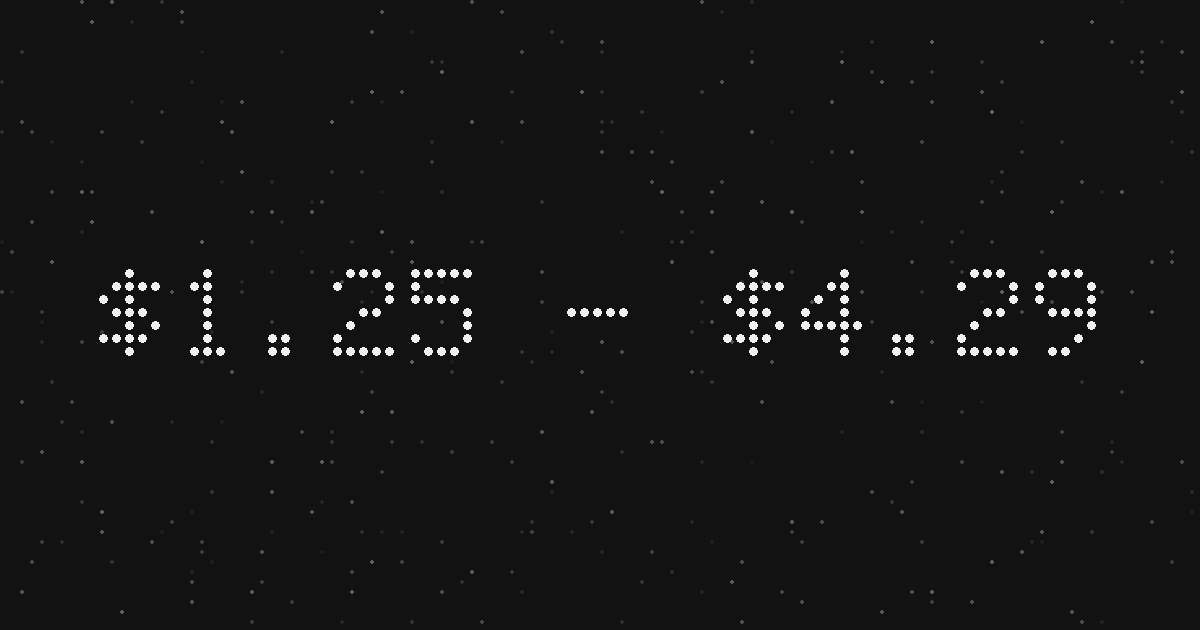
Tonight the panel tracks 21 single-GPU H100 listings across 15 providers. The cheapest is Lium at $1.25 an hour. The most expensive is Lambda Labs at $4.29. Same generation, same memory class, a 3.4x spread. Every one of those rows links the fetch that produced it, so the spread is not a data bug. It is the market. Here is what it is made of.
Some of the spread is silicon
An H100 is not one product. PCIe cards and SXM modules share a name and little else - SXM carries the fast interconnect that multi-GPU training runs lean on, and providers price the difference openly. RunPod quotes H100 PCIe at $1.99 and H100 SXM at $2.69, a 35% premium inside one catalog. Lambda Labs: $3.29 PCIe against $4.29 SXM, a 30% premium. When two H100 prices disagree, the first question is which H100 they mean. Comparison tables that flatten PCIe and SXM into one row are hiding the thing that matters most about the machine.
Some of it is the label
Latitude.sh shows $1.68 and GMI Cloud shows $2.00, and both numbers carry a quiet asterisk: they are "from" prices - marketing floors, not rate cards. A floor tells you the cheapest hour the provider has ever sold, not the hour you will get. We keep those rows in the panel because the receipts are real, but they are marked "(from)" and stay out of headline stats, and this is why. A market quoted in floors looks cheaper than the market you can actually buy.
Some of it is the meter
The sticker price is the on-demand hour, and almost nobody with a serious workload pays it. Civo's own page makes the ladder visible: an L40S is $1.29 on-demand and $0.89 an hour on a 36-month commitment - the same card, 31% cheaper, in exchange for stopping being flexible. Reserved capacity, committed use, spot tiers: the published on-demand rate is the ceiling of the market, not its clearing price. When a provider looks expensive, the honest follow-up is not "who is cheaper" but "cheaper at what term, at what priority, in what region."
And some of it is just opacity
A third of the single-GPU H100 rows on the panel - 7 of 21 - do not say where the machine is. Not the region, not the continent. Latency, data residency, and egress cost all hang on an answer those pages do not give. Meanwhile the two India-based providers in the panel, E2E Networks at $2.66 and JarvisLabs at $2.69, sit mid-pack on price and publish their geography outright. Opacity is not a discount strategy. It is just opacity.
The unit of the AI economy deserves a better quote
The GPU-hour is the base unit of the AI economy, and its price is not a number - it is a structure: SKU, label, term, region, priority. "H100 prices are around $3" is a sentence that sounds informed and answers nothing. The panel exists to replace that sentence with 21 rows, each with a source, a label, and a fetch time. Tonight the honest answer to "what does an H100 cost" is: between $1.25 and $4.29, and here is what decides where you land.